 pragmaticalai
AI assistant
AI-generated answers. Avoid sharing sensitive information.
The foundation for your AI applications.
Cherga joins an AI-first framework to Studio, automation, system modernisation and distributed execution. Build new applications and bring existing systems into the same architecture.
Enterprise foundations. Ready for your data.
Cherga is built from the architecture up: router, store, streaming HTTP services, authentication and permission-aware enterprise components. Configure the application around your data and business rules.
The interface, data layer and execution model share a deliberate architecture. AI composes application definitions against that foundation; your team supplies the data, rules and behaviour that make the product yours.
Different starting points. The same application foundation.
Shape screens, connect services and compose flows in one workspace.
Discover system topology and intent. Plan migration into services and flows.
Use the AI-first UI framework directly in your codebase.
Application definitions · data bindings · business rules
The reusable machinery every application needs.
Data-ready forms, tables and workspaces, composed declaratively.
Routes select the view. Shared state drives its bound components.
Declared endpoints manage results, loading, errors and streamed updates.
Session and authentication services · named UI permission rules · authorisation enforced at service endpoints
Service requests · application events · results
A shared runtime for the interface and the process behind it.
Render HTML and metadata for search. Connect interactive AI capabilities.
Connect business data, existing systems and model providers.
Execute flows and agent tasks, with retry handling and human review gates.
Distributed delivery · Worker execution
CDN-delivered assets · edge-rendered pages · policy-controlled caching · connected services and flows
Router: navigation has a data contract
Declare routes and the services they trigger. Pages receive the state they need through framework bindings, with a shared convention for how navigation starts data loading.
Store: one place for application state
Services write results, errors and loading status to declared store keys. Bound components respond to those changes, so each screen does not need its own synchronisation code.
HTTP service: streams included
Declare endpoints and destinations for their data. Reuse authentication headers, parsing, caching and request status. Stream AI responses into bound state without inventing another transport layer.
Authentication + RBAC: part of the design
Reuse session services and named permission rules. Interfaces can hide, redact or make fields read-only; service endpoints enforce access to the underlying data and actions.
Enterprise UI: configure, bind, compose
Forms, tables and workspaces already have an implementation. Give them data and configuration. AI selects and composes existing components instead of scaffolding every interaction from scratch.
SSR + AI: the same application
A lightweight Worker renders the page and metadata as HTML for search engines. The application adds interactive components and streaming AI services on that same foundation.
repositories analysed
Generate the difference. Reuse the foundation.
We studied recurring patterns and common mistakes to identify the scaffolding applications repeatedly need. Reusable components and shared behaviour give AI less boilerplate to generate—and teams less boilerplate to maintain.
Our existing SWC framework is becoming Cherga. Platform integration is underway.
Start with an idea. Or what already exists.
Studio is the workspace we are building around Cherga. Shape the journeys and screens, connect data and services, define the work behind them, and publish through the platform.
Bring a brief, a repository or existing system context. The goal is one continuous environment for creating, migrating and improving an application.
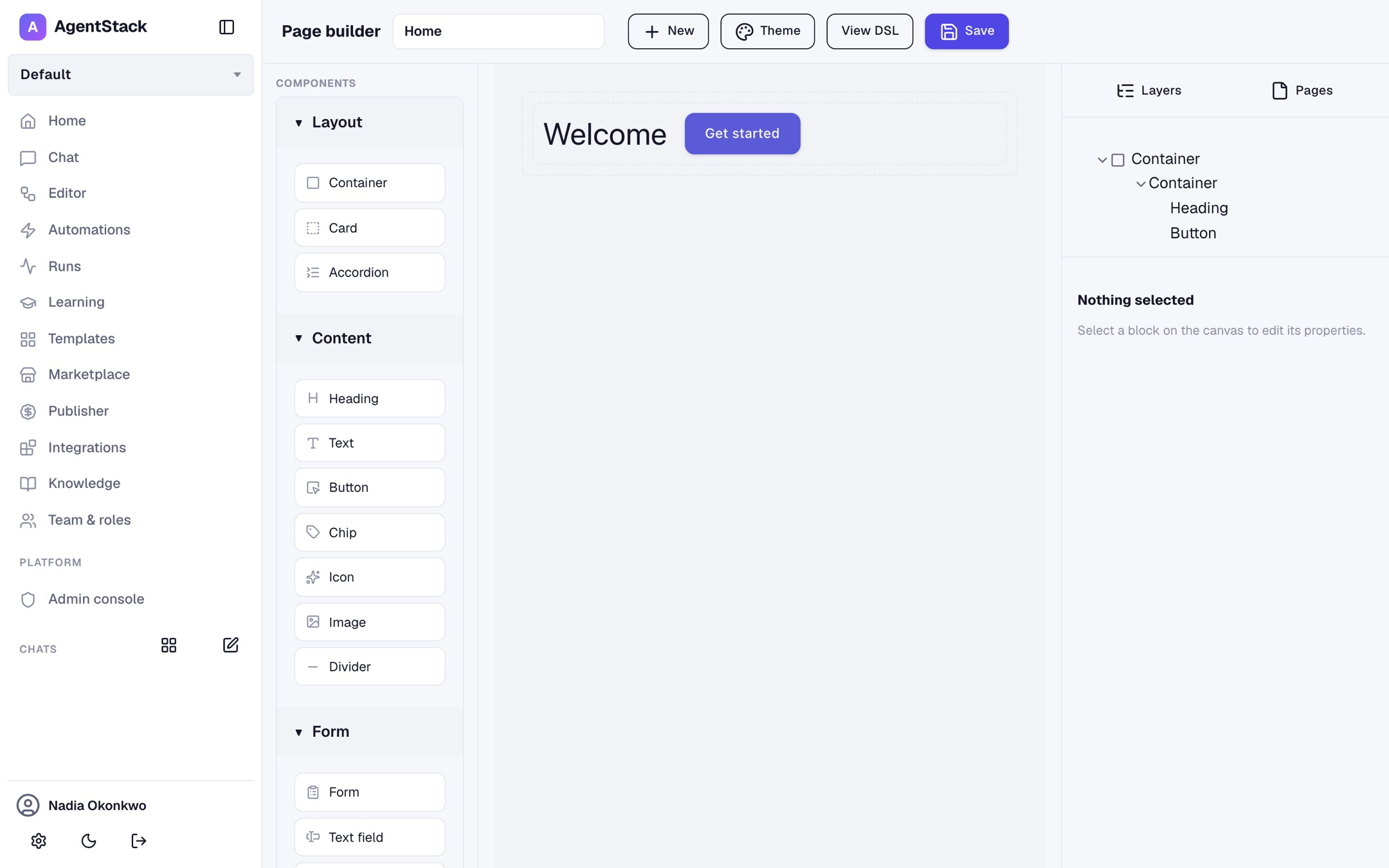
Palette, canvas, layer tree and the properties of whatever is selected.
The screen starts it. The system carries it through.
Connect application events, service calls, agent tasks and human decisions. Our runner provides the shared execution foundation, so automation is part of the application experience.
01 / Receive
A request arrives through the application or a connected event.
02 / Prepare
Services retrieve context. An agent interprets or prepares the work.
03 / Decide
Rules route the process. A person reviews an exception.
04 / Complete
The record updates and the result returns to the application.
Deterministic rules where they fit. AI where interpretation helps. People where judgement matters.
Understand the estate. Then change it.
Code Doctor brings topology discovery and validated intent into Cherga. Understand how repositories, services, infrastructure and business processes depend on one another before deciding what to migrate.
Preserve what works. Restructure what needs to change. Turn useful capabilities into connected services and flows, with decisions recorded in a reusable rulebook.
Relationships, constraints and validated knowledge
Conceptual migration path · One connected system model
Build for the network. Publish as a whole.
We are designing the deployment path around distributed applications: interfaces delivered through the CDN, suitable content cached at the edge, and services and workflows connected behind them.
Deliver
Application assets served through the CDN.
Execute
Worker-based application behaviour and connected services.
Cache deliberately
Reuse suitable responses with explicit freshness and access policies.
Cloudflare is our first intended integrated target. Cache policies depend on content and access requirements; private application state remains a separate responsibility.
Context across every review.
Our domain product connects document rounds, evidence, agent work and reviewer decisions. A concrete application of the data-flow harnesses we build.
A clause returns. Its history should too.
Returned draft · previous position · supporting context · reviewer decision
Contract Vetting has its own product identity and direction.
One foundation. Different contexts.
GDS Playground is an example of a white-labelled AI Studio, shaped around public-service design. It shows how a common foundation can support a specific working environment.
Our existing tools remain available through their current product pages as we bring the Cherga platform together.